
July 07, 2026 | Posted By: Sean Estes
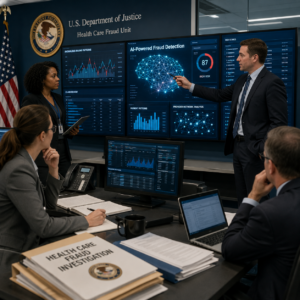 When federal officials announced the 2026 National Health Care Fraud Takedown on June 23rd, they made a point of crediting a relatively new tool: artificial intelligence (AI). The Justice Department announced charges against 455 defendants, including 90 doctors and other licensed medical professionals, for their alleged participation in health care fraud and opioid abuse schemes involving over $6.5 billion in false claims. Officials repeatedly stressed that AI models and advanced data analytics helped them identify suspicious billing and build the cases.
That message is worth paying attention to, whether you work in healthcare, run a medical practice, or are weighing whether to report fraud you have seen firsthand. The government is getting faster and more sophisticated at spotting fraud. But the technology has not replaced the people who know where the bodies are buried. If anything, it has made their information more valuable.
What the Government Actually Announced
The takedown was sweeping. Cases were brought in 56 federal districts and 45 states and territories, with 50 state Medicaid Fraud Control Units participating, the most in the Justice Department’s history. Investigators also worked with international partners, leading to the arrests of suspects overseas and the seizure of over $182 million in cash, luxury vehicles, jewelry, and other assets.
Some of the conduct described by officials was disturbing. In one scheme, a company marketing cardiac screenings reportedly told a young athlete his heart was fine shortly before he died of cardiac arrest. In another case, a nurse practitioner allegedly participated in a scheme that billed Medicare, on average, more than $1 million per patient for unneeded skin grafts. These are not victimless paperwork errors. They drain public programs and, in some cases, put patients in real danger.
How AI Fits Into Fraud Detection
For years, the challenge with healthcare fraud was volume. Medicare and Medicaid process an enormous number of claims, and a fraudulent bill can look almost identical to a legitimate one. Reviewing claims by hand to find patterns was slow and incomplete.
That is where data analytics comes in. According to the Justice Department, the prosecutions involving fraudulent skin grafts stemmed from a payment spike that the Health Care Fraud Unit’s data analytics team flagged. In other words, the software detected an unusual surge in billing for a specific product, which led investigators to the responsible parties. Going forward, officials say they intend to run analytical models that can detect questionable billing closer to real time, ideally stopping improper payments before they go out the door.
You can read the government’s full description in the Department of Justice press release at justice.gov.
Why Whistleblowers Still Matter
Here is the part that often gets lost in the headlines about AI. Data analytics is very good at telling investigators that something looks wrong. It is far less effective at explaining who directed it, why, and whether it was intentional. A billing spike is a clue, not a case.
That context almost always comes from people. The nurse who is told to chart a diagnosis that does not match the patient. The billing clerk who is instructed to use a code that pays more. The sales representative who watches a company push a product for uses it was never approved for. Algorithms can surface the anomaly, but only a person who was in the room can explain what really happened.
This is exactly the role the False Claims Act was designed to encourage. The law allows a private citizen, often called a relator, to file a qui tam lawsuit on behalf of the government when they have evidence of fraud against a federal program. If the case succeeds, the whistleblower is entitled to a share of what the government recovers. As we explained in a recent post on changes to the False Claims Act, those awards typically range from 15 to 30 percent of the recovery, which in large healthcare cases can be substantial.
The healthcare sector remains one of the most active areas for this kind of case. Our attorneys have represented whistleblowers across the industry, from physicians and nurses to billing and compliance staff, in matters involving Medicare, Medicaid, and Tricare. You can learn more on our healthcare whistleblower page.
The Combination Is What Makes Enforcement Work
The smartest way to read this year’s takedown is not as a story about machines replacing people. It is a story about the two working together. Data analytics narrows the field and tells investigators where to look. Whistleblowers provide the firsthand knowledge that turns a statistical red flag into a provable case. Neither piece is as strong on its own.
For anyone who suspects fraud at their workplace, there is also a practical lesson here. The government’s tools are improving, and enforcement is expanding rather than slowing down. Coming forward early, before an algorithm or an investigation reaches you, can make a meaningful difference in how your situation is treated and how your information is valued.
Protection From Retaliation
People who report fraud worry, understandably, about losing their jobs. The False Claims Act anticipates that. It includes strong protections against retaliation, and an employer who terminates, demotes, or harasses someone for reporting or refusing to participate in fraud may face claims for reinstatement, back pay, and damages. A qui tam case is also filed under seal, meaning it stays confidential while the government investigates, which gives whistleblowers an important measure of privacy at the outset.
Talk to a Whistleblower Attorney
If you have knowledge of fraud against Medicare, Medicaid, or another government healthcare program, your information may support a qui tam case, and the timing of when you come forward can matter a great deal. Our attorneys have decades of experience guiding healthcare whistleblowers through this process and protecting them from retaliation.
To discuss your situation in confidence, contact Hoyer Law Group through our contact page at www.hoyerlawgroup.com/contact/ or call (844) 531-0082 to schedule a confidential evaluation.
This blog is for general informational purposes only and does not constitute legal advice. For advice specific to your situation, please consult a qualified attorney.