

AI-Driven “Data Mining” Is Changing Who Can Blow the Whistle on Fraud
Get A Confidential Case Review
AI-Driven “Data Mining” Is Changing Who Can Blow the Whistle on Fraud

 read time
 Updated November 23, 2026
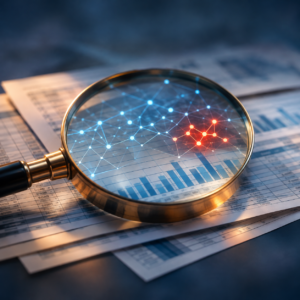 For most of the False Claims Act’s history, a whistleblower case started the same way: an employee, a former employee, or someone with an inside seat noticed something wrong and came forward. That is no longer the only path. A new category of whistleblower, often called a data miner, is bringing cases built not on firsthand knowledge but on patterns pulled from public government data using artificial intelligence (AI) and other analytical tools. The federal government has taken notice, and the shift has real implications for anyone who suspects fraud against government programs, even if they never worked inside the company involved.
A New Kind of Relator
The False Claims Act allows private citizens, known as relators, to file a qui tam lawsuit on behalf of the government when someone or a company defrauds federal programs, and to share in whatever the government recovers. The law has never required a relator to have been personally harmed by the fraud or to have worked for the company accused of it.
Data miners are taking that principle further. Rather than relying on something they witnessed on the job, they analyze large public datasets, such as government payment records, procurement filings, or program disclosures, looking for statistical patterns that suggest a company is billing, certifying, or reporting something it should not be.
This is not a fringe trend. The U.S. Department of Justice has reported that qui tam filings have climbed sharply in the last two years, from a then-record 980 filings in fiscal year 2024 to roughly 1,297 filings in fiscal year 2025, the highest total in the statute’s history. The Department has been direct about what is driving much of that increase: a growing share of new cases from individuals and entities mining publicly available government data rather than insider tips.
DOJ’s FOCUS Initiative
In the spring of 2026, the Justice Department’s Civil Division rolled out the FOCUS initiative (Fraud Oversight through Careful Use of Statistics), aimed squarely at this new category of relator. The initiative invites data miners to explain their methodology directly to the Department: how they identify anomalies, how they validate their findings, and why their approach reliably points to actual fraud rather than a harmless statistical quirk. You can read the Department’s own announcement here.
The initiative cuts both ways. On one hand, it confirms that the government sees real value in data-driven fraud detection and wants to work with relators who do it well. On the other hand, it makes clear that DOJ will not treat every outlier as a viable case. A data miner, and by extension the attorneys who bring these cases, must rule out innocent explanations for an anomaly, connect the pattern to a specific legal violation, and satisfy the heightened pleading standard that fraud claims require under the federal rules. Put another way, an unusual number in a spreadsheet is a starting point for an investigation, not a lawsuit.
Where This Trend Is Showing Up
Data mining works best where three things line up: heavy government spending, large amounts of public data, and clear rules a company is supposed to follow. Pandemic-era relief lending is the clearest example so far. When the government released detailed data on who received Paycheck Protection Program and other emergency loans, it gave data miners a rich, public dataset to comb through, and a wave of False Claims Act cases followed. Going forward, industries with the same combination- healthcare and Medicare or Medicaid billing, federal contracting, grant and loan programs, and customs and tariff compliance- are likely to see more of this kind of scrutiny as the analytical tools get more sophisticated.
What It Means If You Have Seen Something
The practical takeaway is not that you need to run your own data analysis to have a viable whistleblower case. Most of our clients still come to us the traditional way, because of what they observed firsthand on the job. What is changing is the range of evidence that can support a case, and the level of rigor that both DOJ and the courts now expect before a pattern becomes a lawsuit. If you have noticed something that does not add up, whether it is a billing practice, a certification that seems inconsistent with reality, or a pattern in how a government contract or program is being administered, that instinct is worth having evaluated by someone who understands both the underlying regulations and what it takes to plead a False Claims Act case.
We covered the broader shifts reshaping False Claims Act litigation, including record recoveries and a pending constitutional challenge to the qui tam framework, in an earlier post: The False Claims Act Is Changing: What Whistleblowers Need to Know Right Now. The data-mining trend discussed here is part of that same larger picture.
Talk to Us If You Think You Have A Whistleblower Claim
If you believe you have information about fraud against the government, whether it comes from something you witnessed at work or a pattern you have noticed in public records, the details matter, and so does the timing. Our whistleblower team can help you evaluate what you have and what filing a case would actually involve. Contact us for a confidential case evaluation or call (844) 531-0082.
This blog is for general informational purposes only and does not constitute legal advice. For advice specific to your situation, please consult a qualified attorney.

We’re Here to Help
Schedule a confidential evaluation to discuss your employment, whistleblower, or business matter.